Failed: A Clean and Versatile Techno Font for Modern Design
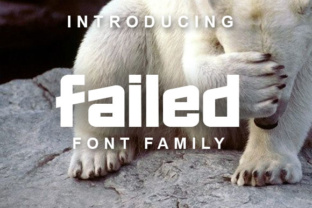
Failed is a techno font family that combines modern aesthetics with functional design. Its clean lines and structured forms make it ideal for a variety of visual projects, from digital interfaces to printed materials. Designed with clarity and impact in mind, Failed offers a distinctive look that stands out without sacrificing readability.
What Makes Failed Unique?
Failed distinguishes itself through its minimalist approach and technical precision. The font features sharp edges, consistent stroke widths, and a uniform rhythm that contributes to its overall sense of order. These characteristics make it particularly well-suited for applications where legibility and visual coherence are essential.
The font’s design reflects the influence of industrial and digital typography, drawing inspiration from the clean, no-nonsense aesthetic of early 20th-century modernism. This gives Failed a timeless quality that can complement both contemporary and retro-inspired designs.
Key Characteristics of Failed
- Minimalist Design: Failed avoids unnecessary embellishments, focusing instead on simplicity and clarity.
- High Readability: Despite its bold appearance, the font maintains excellent legibility at various sizes.
- Technical Precision: The font’s construction ensures consistent spacing and alignment, which is crucial for professional use.
- Versatile Applications: Failed works well in both digital and print formats, making it a flexible choice for designers.
Practical Uses for Failed
Failed is particularly effective in scenarios where strong visual communication is needed. It excels as a headline font, drawing attention without overwhelming the reader. Its clean structure also makes it suitable for body text in contexts where a modern, professional look is desired.
Designers often use Failed for posters, flyers, and banners, where it adds a sense of energy and sophistication. Its versatility extends to user interface (UI) design, where it can be used for buttons, labels, and other interactive elements. The font’s consistency across different weights and styles allows for cohesive visual hierarchies.
In branding, Failed can serve as a primary or secondary typeface, depending on the brand’s identity. Its neutral yet striking appearance makes it adaptable to a wide range of industries, from tech startups to creative agencies.
Strengths and Limitations
One of Failed’s greatest strengths is its balance between style and functionality. It avoids the extremes of overly decorative or excessively minimal fonts, offering a middle ground that is both visually appealing and practical. This makes it a reliable choice for designers who need a font that performs well in multiple contexts.
However, Failed may not be the best option for all projects. Its rigid structure could feel too formal for casual or artistic applications. Additionally, while it works well in large-scale displays, it may not be the most expressive choice for extended blocks of text.
Despite these limitations, Failed remains a solid choice for projects that prioritize clarity and modernity. Its consistent performance across different platforms and sizes ensures that it delivers a professional result regardless of the medium.
Who Benefits Most from Using Failed?
Failed is particularly beneficial for professionals in fields such as graphic design, marketing, and web development. Its clean and structured form makes it ideal for creating visually compelling content that communicates effectively.
Entrepreneurs and small business owners may find Failed useful for branding and promotional materials. Its professional appearance can help establish credibility and reinforce a brand’s identity. For freelancers and creatives, Failed offers a versatile tool that can enhance their portfolio and client work.
Marketers and advertisers can leverage Failed to create eye-catching headlines and calls to action. Its boldness and clarity make it an effective choice for campaigns that require immediate visual impact.
Real-World Performance and Usability
In practice, Failed performs reliably across different environments. Whether used in digital layouts or printed materials, it maintains its integrity and visual appeal. The font’s compatibility with various design software ensures that it integrates smoothly into existing workflows.
Usability is another key factor. Failed’s straightforward design reduces the risk of typographic errors, making it easier to implement correctly. Its availability in multiple weights and styles also enhances its usability, allowing designers to create layered and dynamic compositions.
Consistency is a major advantage of Failed. The font’s uniform proportions and spacing ensure that it looks polished and professional in any context. This level of reliability is especially important for projects that require a high degree of visual consistency.
Long-Term Value and Considerations
When evaluating the long-term value of Failed, it’s important to consider its adaptability and relevance. As a techno font, it aligns with current design trends while maintaining a timeless quality. This makes it a sustainable choice for designers looking for a font that will remain relevant over time.
For businesses and individuals investing in typography, Failed offers a cost-effective solution that delivers consistent results. Its broad range of applications means that it can be used across multiple projects, reducing the need for additional fonts.
However, it’s always wise to test a font in real-world scenarios before committing to it. While Failed has proven effective in many cases, its suitability depends on the specific needs of each project. Designers should evaluate how it fits within their broader typographic strategy.
Final Thoughts on Failed
Failed is a thoughtfully designed font that balances style with functionality. Its clean, structured form makes it an excellent choice for a wide range of design projects, from headlines to UI elements. For professionals seeking a reliable and versatile typeface, Failed offers a compelling option that meets both aesthetic and practical demands.
Whether you’re working on a marketing campaign, a website, or a printed brochure, Failed provides a modern and professional look that can elevate your design work. Its strengths in readability, consistency, and adaptability make it a valuable addition to any designer’s toolkit.